35% wholegrain Artisan Bread with Poolish
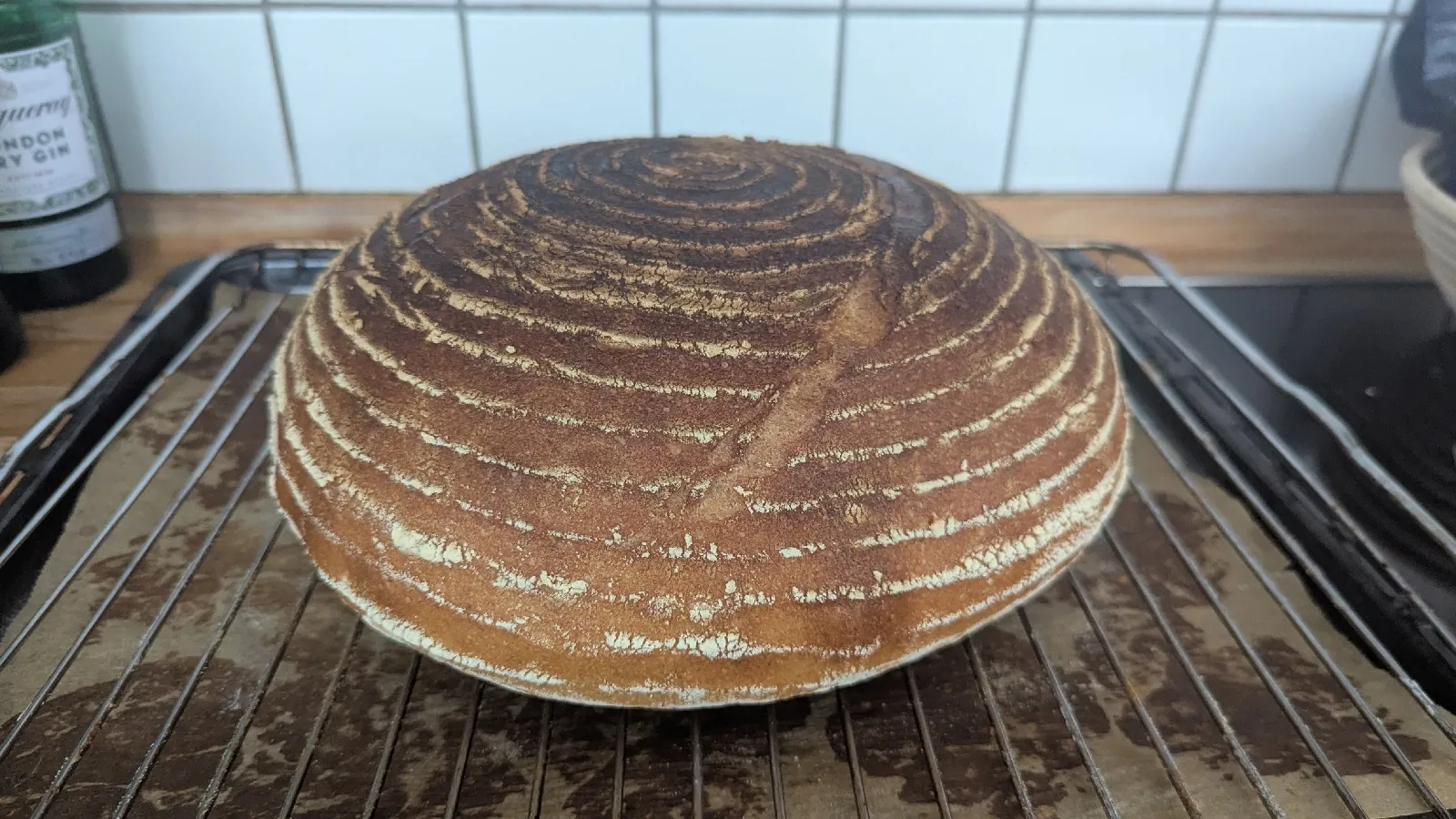
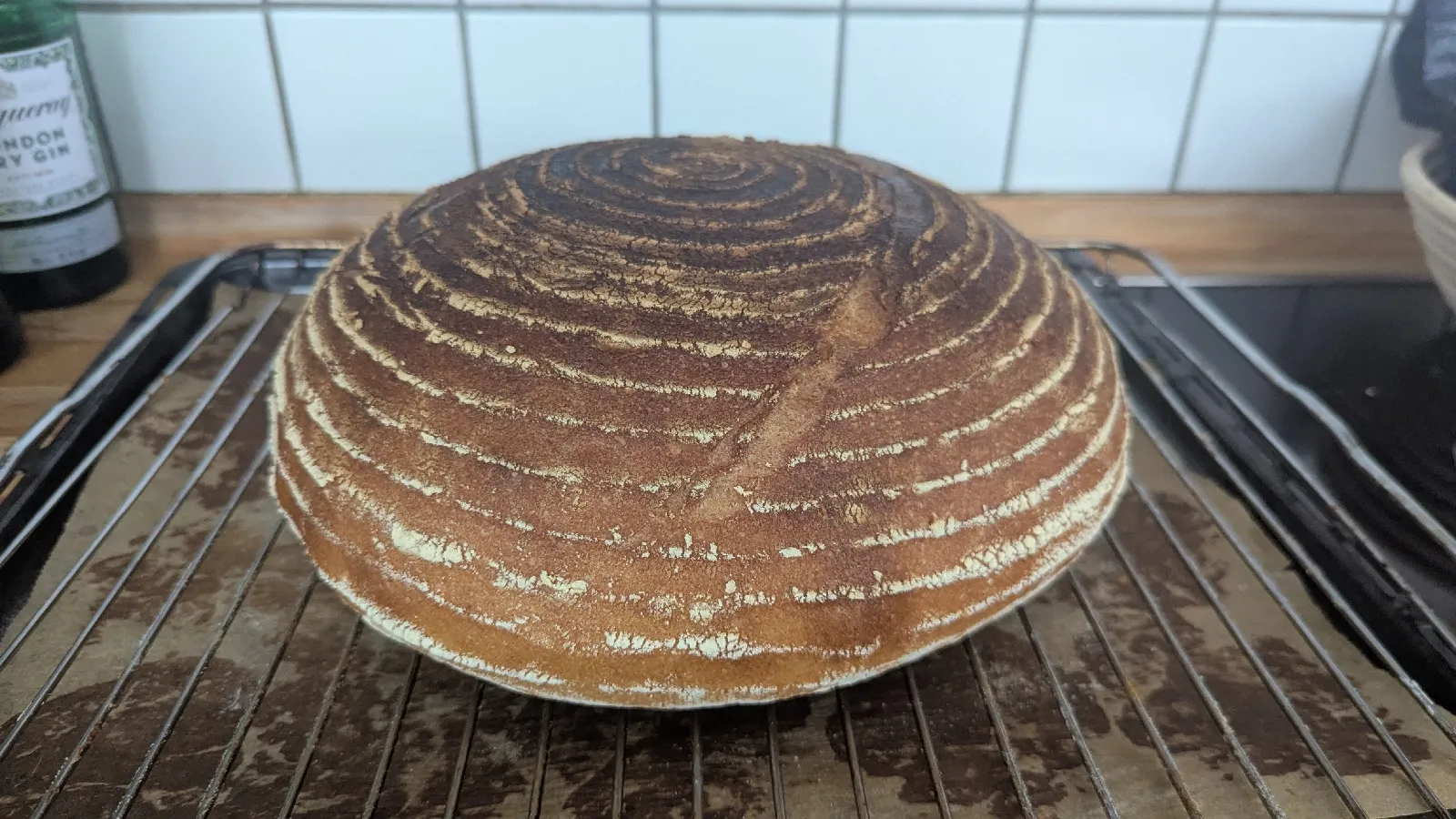
35% wholegrain Artisan Bread with Poolish
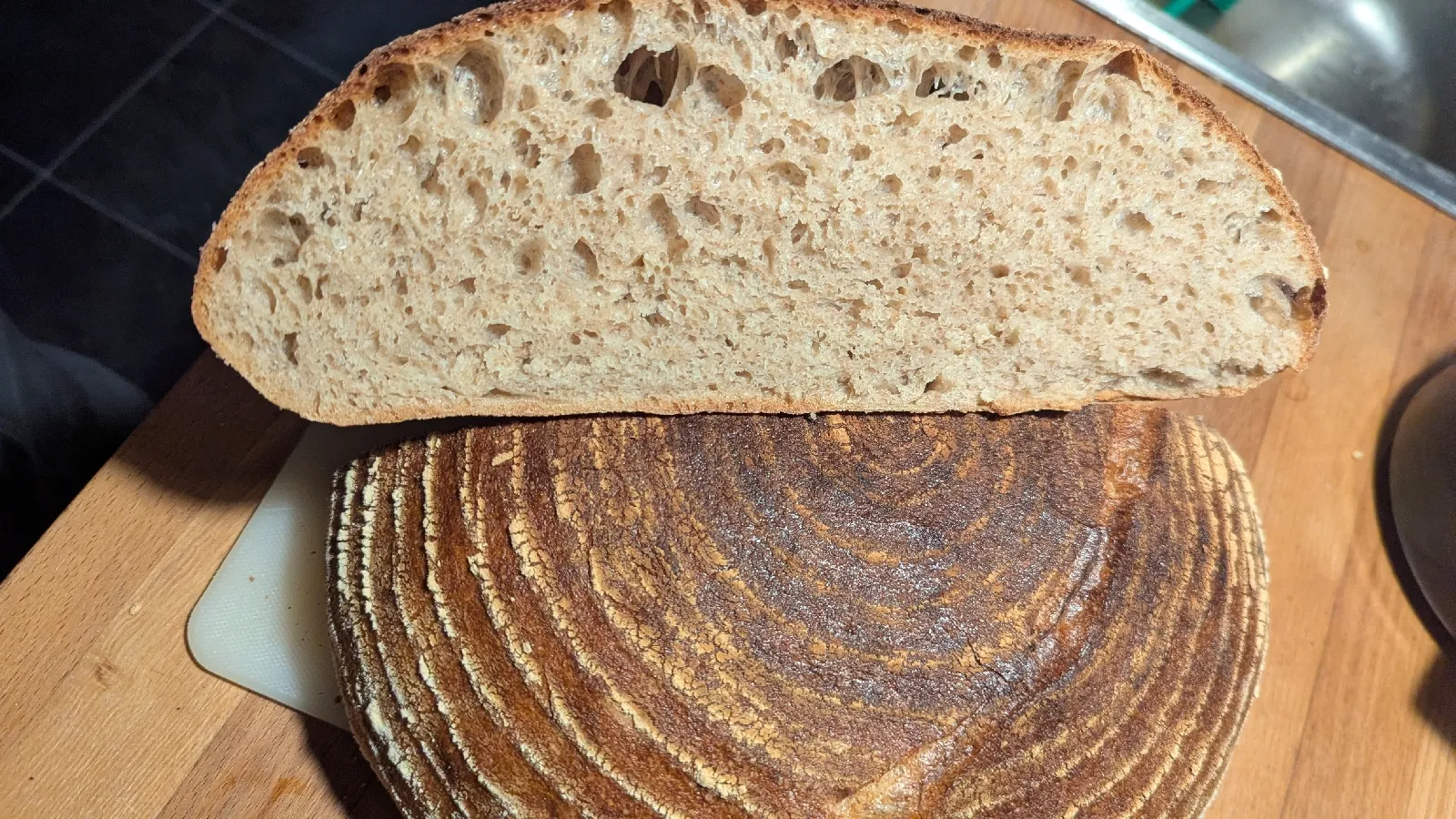
This is a straightforward recipe for a rustic, sourdough-style loaf made without a starter. Flavor and structure come from a long-fermented poolish, high hydration, and gentle handling rather than from levain. The bread has good oven spring, an open crumb, and a dark, well-caramelized crust, and it works very well with 30–35% fresh-milled wholegrain flour.
The method is simple and reliable, and the dough is mixed and developed entirely by hand.
The Bread
-
One large hearth loaf (about 900 g baked)
-
Mildly tangy, wheaty flavor
-
Open but resilient crumb
-
Dark, crisp crust
-
Baked on a Baking Steel with steam
Room temperature: 20–21 °C
Ingredients
Total flour: 1000 g
Poolish (prepare 12–14 hours in advance)
-
Caputo white flour (Pizzeria or Nuvola): 300 g
-
Water: 300 g
-
Dry yeast (Caputo green): 0.3 g
(or fresh yeast: 1 g)
Final dough
-
Poolish: all of the above
-
Caputo white flour: 350 g
-
Wholegrain flour, fresh milled: 350 g
-
Water: 430–460 g
-
Salt: 20 g
-
Dry yeast (Caputo green): 0.6 g
(or fresh yeast: 2 g)
Wholegrain suggestion
A balanced and reliable blend:
-
50% Mariagertoba wheat, 175g
-
30% Ølandshvede, 105g
-
20% Emmer, 70g
Method
1. Poolish
Mix the flour, water, and yeast until smooth. Cover loosely and leave to ferment at room temperature for 12–14 hours. The poolish should be very bubbly and just beginning to flatten when ready.
2. Autolyse
In a large bowl, mix all remaining flour with all the final-dough water except about 30–40 g. Mix only until no dry flour remains. Cover and rest for 45–60 minutes.
3. Mix the dough
Add the poolish, salt, yeast (dissolved in a little of the reserved water), and the remaining water as needed. Mix by hand for 2–3 minutes, until the dough is cohesive but still loose and slightly uneven. It should feel elastic, not tight.
4. Bulk fermentation
Let the dough ferment at room temperature for 3.5–4.5 hours.
After 20 minutes, give the dough one set of stretch-and-folds. Continue with 2–3 sets of coil folds at 30-minute intervals, stopping once the dough holds its shape and feels aerated.
The dough is ready when it has risen about 60–70% and feels lively and elastic.
5. Shape
Lightly pre-shape the dough into a round and let it rest for 20–30 minutes. Shape into a boule or bâtard with moderate tension and place seam-side up in a floured banneton.
6. Cold fermentation
Refrigerate the shaped loaf for 12–18 hours at 3–5 °C.
Baking
Preheat the oven to 275 °C with a Baking Steel on the middle rack and a tray with lava rocks on the oven floor. Preheat for at least 45–60 minutes.
Bake the bread straight from the refrigerator. Score, load onto the steel, and immediately pour 300–400 ml boiling water over the lava rocks to create steam.
-
275 °C with steam: 15 minutes
-
Vent steam, reduce to 240 °C: 20–25 minutes
-
Optional: finish with the oven door slightly open for the last 5 minutes
The bread is done when the crust is deep brown and the internal temperature reaches 98–99 °C.
Notes on yeast
-
Dry yeast (Caputo green) works very well for long fermentation and is easy to dose accurately.
-
Fresh yeast can be used at roughly three times the weight of dry yeast.
Both give excellent results in this recipe.
This bread delivers much of what people associate with sourdough—structure, aroma, and depth of flavor—while remaining simple and predictable to bake.