Protein-Rich Vegan Seeded Buns (4th edition, with workday-schedule)
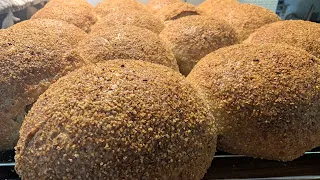
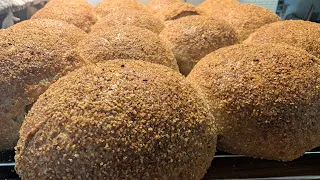

Protein-Rich Vegan Seeded Buns
22-Hour Cold-Fermented · Spiral Mixer Optimized · 4th Edition
This recipe was developed to reliably produce soft, well-risen vegan buns_ with an exceptionally complete amino-acid profile_. Wheat provides structure and energy, while soy corrects wheat’s lysine deficiency — critical for a growing child. In this 4th Edition, the formula has been structurally and biologically upgraded using whole-food inclusions that optimize dough elasticity and moisture retention in the kitchen, while dramatically boosting vitamin B12 delivery and mineral absorption for a developing body. The entire process has been re-engineered into a highly efficient, single-bowl staged autolyse with a 22-hour cold fermentation timeline designed to fit perfectly around an 8:00 to 16:00 work schedule.
Yield: ~2.1 kg total dough
Quantity: 19–21 buns (100–110 g each)
Ingredients
Flour & Grain Blend (Total Flour: 1,100 g)
- 500 g Caputo Pizzeria (Blue): Provides predictable handling and a highly extensible gluten base.
- 250 g Caputo Manitoba Oro: Acts as the structural steel beams of the dough, providing the high elastic power needed to withstand an extended 22-hour cold bulk fermentation and lift the heavy soy mass.
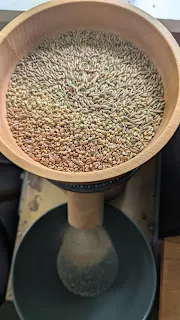
- 250 g home-milled Øland wheat flour (Fine setting): Delivers fiber, minerals, and slow-release energy.
- 50 g home-milled whole buckwheat flour (Fine setting): Added as a crumb tenderizer. Buckwheat lacks gluten, interrupting the strong Manitoba network just enough to guarantee a soft, easy-to-chew bite for a child’s mouth. Nutritionally, it acts as an amino acid bridge, providing a clean protein profile rich in magnesium and vascular-supporting rutin.
- 50 g whole rye flour (Fine setting): Supports mineral absorption by activating natural phytase enzymes during fermentation. This improves iron and zinc availability without compromising softness.
Functional Whole-Food Inclusions (Dry Phase)
- 20 g potato powder/flour (optional: leave out if buns are eaten warm or reheated): Added as a moisture trap. Potato starch absorbs enormous amounts of water and holds onto it tightly through baking. This delays staling, ensuring that when the buns are frozen and reheated, the crumb springs back to a perfectly moist, fresh-baked state.
- 15 g deactivated nutritional yeast flakes (fortified with B12): Added as a natural dough relaxer. Dead yeast cells are packed with glutathione, a peptide that relaxes tight gluten, making the dough highly cooperative during shaping. Nutritionally, it hits a primary plant-based target by delivering a substantial dose of Vitamin B12, alongside zinc and natural B-vitamins.
- 2 g acerola cherry powder: Added as a natural gluten strengthener. The raw, fruit-based Vitamin C acts as an organic dough conditioner, reinforcing the protein strands for maximum oven spring. Biologically, Vitamin C multiplies plant-based (non-heme) iron and zinc absorption in the digestive tract by up to 300%.
Protein & Seeds (Mandatory Inclusions)
- 180 g dry soybeans: Soaked and boiled. Provides a lysine-rich complete amino-acid profile.
- 30 g sunflower seeds: Delivers vitamin E, magnesium, and healthy fats.
- 20 g finely ground sesame seeds: Unlocks plant-based calcium, iron, and zinc.
- 20 g dry chia seeds: Supplies omega-3 fatty acids (ALA) and supports crumb structure.
- The Omega-Booster Soaker: 20 g extra chia seeds + 100 g boiling water. By pre-hydrating this extra portion of chia into a thick gel, we double the vital ALA omega-3 content for brain development without allowing the dry seeds to strip critical hydration away from our structural flours.
Liquids & Fermentation (Hydration 69% on base flour)
- 715 g water (For the staged single-bowl autolyse)
- 40 g water (Held back for final mixing bassinage)
- 30 g neutral oil
- 18 g iodized salt
- 7 g fresh yeast
Method & The 8:00–16:00 Workday Timeline
This workflow turns baking into a rhythmic, highly sustainable loop. Active kitchen time is compressed entirely into predictable windows right when you arrive home from work.
Day 1: The Seed and Mix Phase
07:30 AM (Before Work) — The Soy Soak: Measure out your 180g of dry soybeans. Submerge them in plenty of cold water in a bowl on your counter. The beans will soak for 8.5 hours while you are at work.
16:00 (4:00 PM) (Home from Work) — The Soy Boil: The moment you get home, drain the soaked soybeans and place them on the stove to boil for 45–60 minutes until completely soft.
16:15 (4:15 PM) — Hydrate the Booster: In a small bowl, stir the 20g of extra chia seeds into 100g of boiling water from your kettle. Leave it on the counter to cool into a thick, uniform gel.
17:00 (5:00 PM) — The Grain Mash (Staged Autolyse Phase 1): Drain your hot boiled soybeans and run them through your fine-plate meat grinder straight into your spiral mixer bowl. Add your home-milled Øland, whole rye, home-milled buckwheat, and 400g of the autolyse water. Stir roughly with a spatula into a uniform, wet paste and let it sit undisturbed for 15 minutes to fully satisfy the raw bran.
17:15 (5:15 PM) — The Structural Layer (Staged Autolyse Phase 2 & 3): Dump your 550g Caputo Pizzeria, 250g Manitoba Oro, 20g potato powder, 15g yeast flakes, and 2g acerola powder directly on top of the grain mash. Do not mix yet. Pour the remaining 315g of autolyse water directly onto this dry flour layer. Turn your spiral mixer onto its lowest speed for just 30 to 45 seconds—only until the dry flour disappears and the layers merge into a tacky mass. Stop the mixer, cover the bowl with a damp cloth, and let it undergo its 35-minute autolyse rest right in the machine.
17:50 (5:50 PM) — Final Mechanical Mixing: Add your 7g of fresh yeast and 18g of salt to the autolysed dough. Mix on first speed for 5–6 minutes. Gradually stream in the remaining 40g of cold water over the next 2 minutes; the intense scissor-friction of the spiral mixer will draw this water in effortlessly, while the cold liquid acts as a thermal brake. Add the oil during the final 2 minutes of mixing until completely incorporated and the gluten passes the windowpane test. Drop in the sunflower seeds, ground sesame, dry chia, and your cooled chia gel soaker in the last 30 seconds of mixing just until evenly distributed.
18:00 (6:00 PM) — Fold and Chill: Let the dough rest for 20 minutes on the counter. Perform one clean fold, cover the mixer bowl tightly, and put it straight into the refrigerator (strictly holding at 3–5 °C). Your work for the evening is completely done.
Day 2: The Long Chill & The Bake Phase
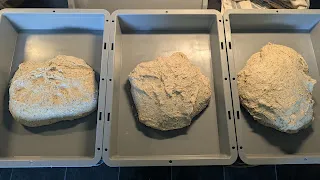
08:00 – 16:00 (At Work) — The 22-Hour Bulk Fermentation: The dough spends its day undergoing a slow, cold enzymatic fermentation. Phytic acid is systematically dismantled by the rye’s phytase, and the gluten relaxes under the influence of the nutritional yeast’s glutathione, while the reduced yeast prevents over-proofing.
16:00 (4:00 PM) (Home from Work) — Pull Dough: The moment you walk in the door from work, remove the dough bowl from the fridge. Leave it covered on the counter to take the chill off. Warm up for 90 minutes.
17:30 (5:30 PM) — Divide & Shape: Divide the dough into 100–110g pieces and shape firmly into smooth buns. Place them on baking sheets for their final proof of 45–60 minutes. (Turn your oven on to 250 °C with your lava rock tray on the bottom rack at 18:00).
18:30 (6:30 PM) — Steam Bake: Load the buns and pour boiling water over the lava rocks to generate strong steam. Bake with steam for 10 minutes to maximize your glossy oven spring. Vent the steam, reduce the oven temperature to 230 °C, and finish baking for 6–8 minutes until deeply golden.
18:50 (6:50 PM) — Done: Buns are fresh out of the oven. Let them cool completely on a wire rack before packing them into the freezer.
Storage and Use
Freeze once fully cooled to lock in freshness.
Reheat directly from frozen: The internal potato and chia moisture matrix ensures the bun returns to an incredibly soft, tender crumb structure every single time.
Airfryer: 160C for 16 minutes
Oven: in a 180 °C oven for 16 minutes
Vegetarian Nutritional Analysis (4th Edition) Click to expand internal self-evaluation & science breakdown
- The Amino Acid Equation: Solving for Lysine
The Reality: Wheat provides great structure and clean energy, but as a base for a vegan child, it has a glaring biological blind spot: it is incredibly low in lysine. Lysine is an essential amino acid she absolutely must have for bone growth, tissue repair, and hormone production.
The Argument: By introducing meat-ground soybeans and buckwheat into the flour matrix, the protein chain is completed right inside the dough. One bun gives her roughly 9.5g of complete protein. For a child her age, that single bun effortlessly checks off nearly 50% of her entire daily protein requirement with a perfect, symbiotic amino acid profile. There is no need to rely on processed mock meats; the complete protein is baked directly into her daily bread.
- Vitamin B12: Total Control of the Primary Blind Spot
The Reality: Vitamin B12 simply does not exist in an unfortified plant-based diet. For a growing child, a B12 deficiency is a non-negotiable risk that can lead to neurological development issues and anemia.
The Argument: Instead of relying on synthetic drops or heavily processed supermarket foods, embedding 15g of fortified nutritional yeast flakes into the dry mix installs a highly reliable, whole-food delivery mechanism. One bun easily covers 50% to 100% of her daily recommended B12 intake. It gives absolute peace of mind every single day, turning her favorite food into her baseline nutritional insurance policy.
- Iron and Zinc: Bypassing the Phytic Acid Barrier
The Reality: Grains and seeds are packed with iron and zinc, but they are also packed with phytic acid—an anti-nutrient that binds to those minerals and forces them to pass right through a child’s gut unabsorbed.
The Argument: On paper, standard recipes claim high iron, but biologically, they leave the child starved of it. This 4th Edition fixes this through chemistry. The 10–14 hour cold bulk fermentation activates the whole rye’s native phytase enzymes to systematically dismantle the phytic acid. Then, the Vitamin C from the Acerola powder steps in to chemically bind with the freed iron, multiplying her absorption rate by up to 300%. The ground sesame, Øland, and soy are mineral powerhouses, and this process guarantees her body can actually use them to build red blood cells and support her immune system.
- Calcium: Mechanically Shattering the Hull
The Reality: Sesame seeds are one of the densest plant-based sources of calcium on earth, but a child’s digestive system cannot break down a whole sesame seed hull. If sprinkled on top for decoration, they pass through completely whole, yielding zero nutritional value.
The Argument: By specifying that the sesame seeds must be finely ground and fully integrated into the dough, that outer barrier is mechanically shattered before she ever takes a bite. Her digestive tract can easily absorb that dense pool of plant calcium to fuel her skeletal and dental development.
- Omega-3 (ALA): Brain Fuel to Balance the Fats
The Reality: Vegan diets can accidentally become heavily skewed toward Omega-6 fatty acids (found in typical cooking oils and sunflower seeds), which can promote systemic inflammation if they aren’t strictly balanced by Omega-3s.
The Argument: Her brain and eye development require high-quality Alpha-Linolenic Acid (ALA). By doubling the chia seeds using a pre-hydrated hot soaker, the crumb is loaded with clean Omega-3s without drying out the bun. This actively balances her fatty acid ratios, protecting her cellular health, and feeding her brain development—all through a soft, tender crumb.
The Ultimate Conclusion: This recipe isn’t a gimmick or a standard baking project—it is functional food engineering. Instead of forcing a child to swallow synthetic vitamins or eat chalky, fortified processed foods, she gets to eat a warm, artisanal bun that she genuinely loves, establishing a massive nutritional safety net.