Protein-Rich Vegan Wheat–Soy Buns (Reliable, Nutritious, Freezer-Friendly) (2 hour bulk)
Protein-Rich Vegan Wheat–Soy Buns
Reliable, freezer-friendly buns for a growing vegan child
This recipe was developed to support my 12-year-old daughter’s vegan lifestyle.
At this age, adequate protein quality is important, not just total protein.
Wheat bread is practical and familiar, but wheat alone is low in lysine.
By combining wheat flour with properly cooked and meat-ground soybeans, these buns provide complete essential amino acids while remaining robust and easy to bake at home.
Yield
-
Total dough: ~2 kg
-
20 buns (100g each)
Ingredients
Flour & Protein Base
- 750 g white wheat flour (Caputo blue preferred)
Provides strong gluten structure for volume and a light crumb.
- 200 g whole-milled Øland wheat flour
Adds fiber, minerals, and flavor while supporting slow energy release.
- 50 g whole rye flour
Improves iron and zinc absorption through natural phytase activity.
- 150 g dry soybeans, soaked, boiled, and meat-ground
Supplies lysine-rich protein to complete wheat’s amino-acid profile.
Seeds (optional but recommended)
- 20 g chia seeds
Rich in omega-3 fatty acids (ALA), supporting brain and heart health.
- 40 g whole sunflower seeds
Provide vitamin E, magnesium, and healthy fats.
- 20 g finely ground sesame seeds
Contribute calcium, iron, and zinc, important in vegan diets.
Liquids & Additions
- 660 g water total
620 g for autolyse + 40 g added during mixing for proper hydration.
- 30 g neutral oil
Improves crumb softness and freeze–thaw stability.
- 16 g iodized salt
Controls fermentation and provides dietary iodine.
- 20 g fresh yeast or 7 g dry yeast
Ensures reliable fermentation and visible rise.
Method
1. Prepare the Soy
-
Soak soybeans 8–12 hours.
-
Boil 45–60 minutes until completely soft.
-
Drain very well and let steam off for 5–10 minutes.
-
Grind warm soybeans through a meat grinder (fine plate).
The soy paste should be smooth but slightly granular, similar to thick hummus.
Add only minimal water if needed and count it as part of total hydration.
2. Autolyse
-
Combine all flour, ground soy, and 620 g water.
-
Mix briefly until no dry flour remains.
-
Rest 25–30 minutes.
The dough should feel soft, shaggy, and extensible — not stiff.
3. Final Mixing (Spiral Mixer, One Speed)
-
Add yeast and salt.
-
Mix 5–6 minutes.
-
Gradually add the remaining 40 g water.
-
Continue mixing until gluten is clearly developed (total 8–9 minutes).
-
Add oil during the final 2 minutes.
-
Add seeds during the last 30 seconds only.
The dough should be cohesive, elastic, and slightly tacky.
4. Bulk Fermentation
-
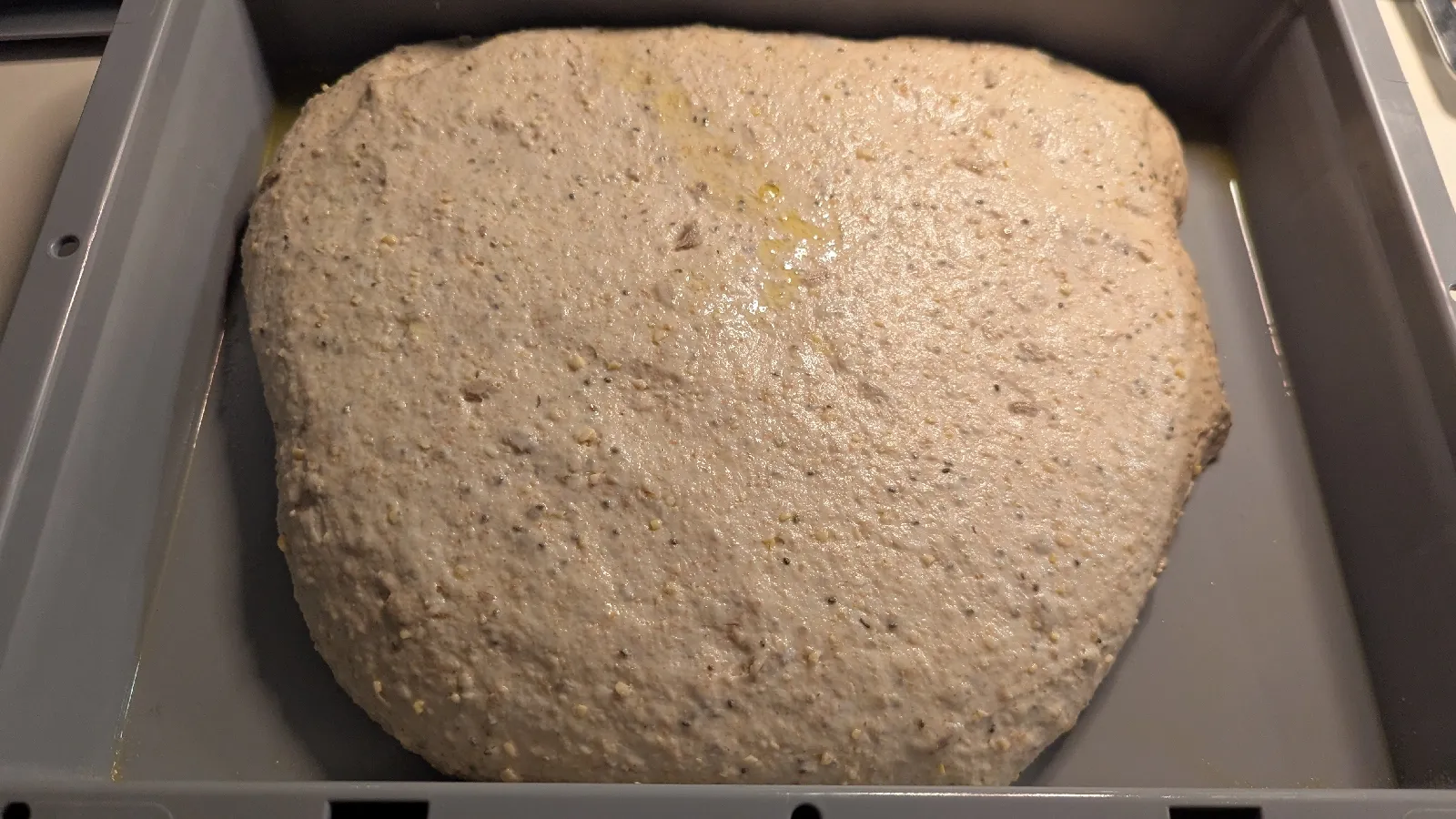
2 hours at 22–24 °C
-
One gentle fold after 60 minutes
Expect a 60–80% volume increase and visible gas formation.
5. Shaping & Baking
-
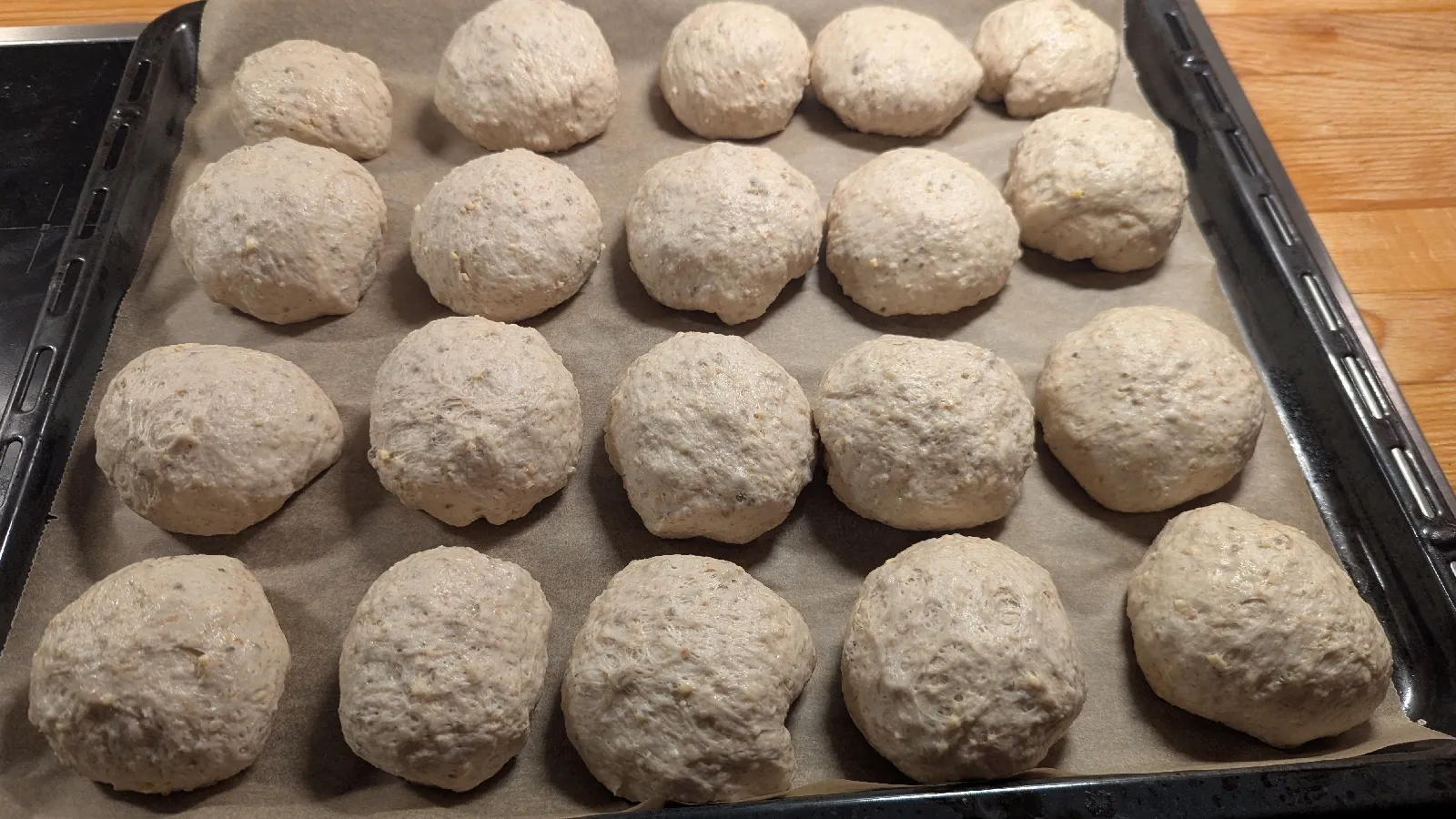
Divide into 18–20 pieces.
-
Shape tightly into buns.
-
Final proof 45–60 minutes.
-
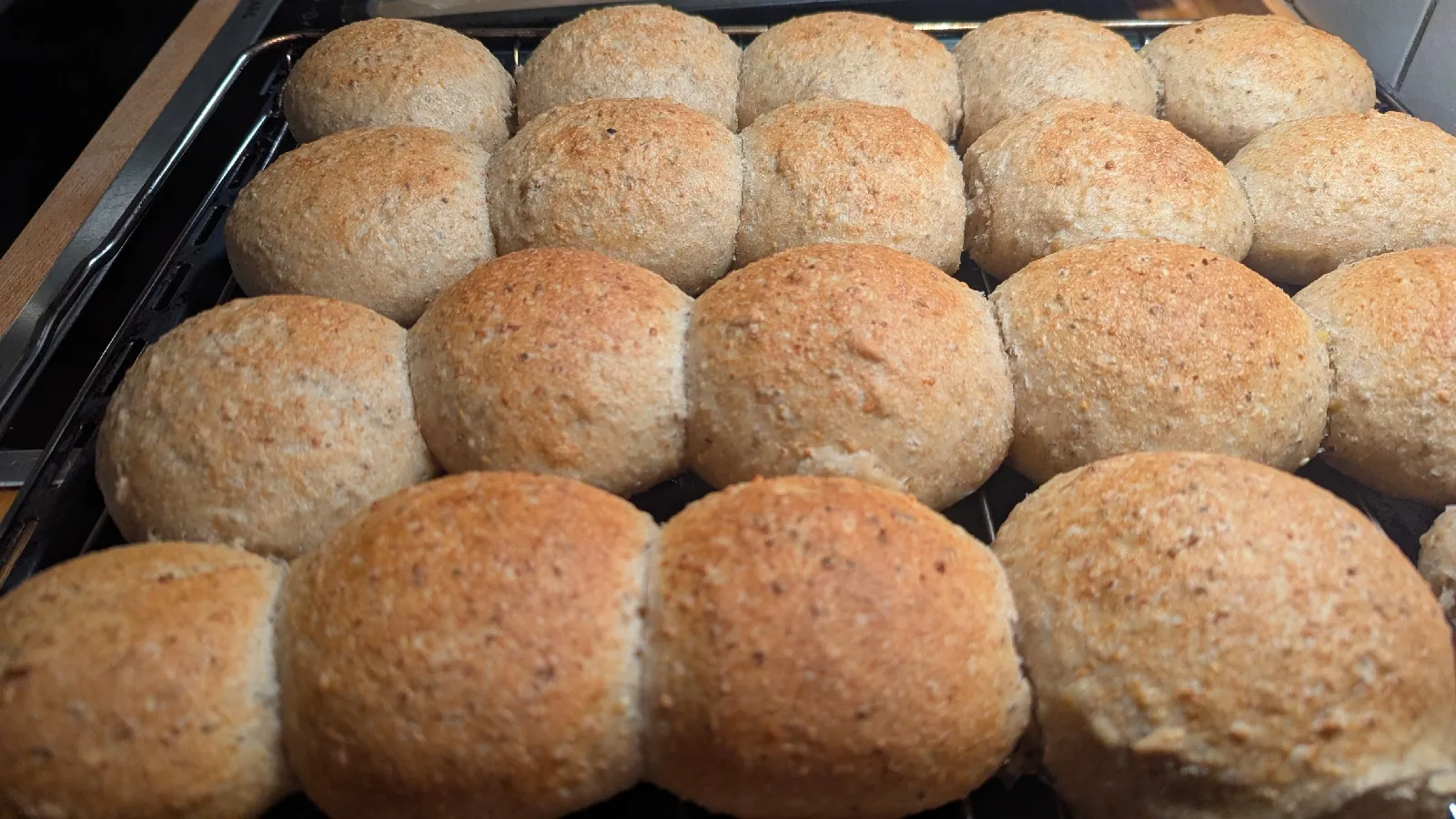
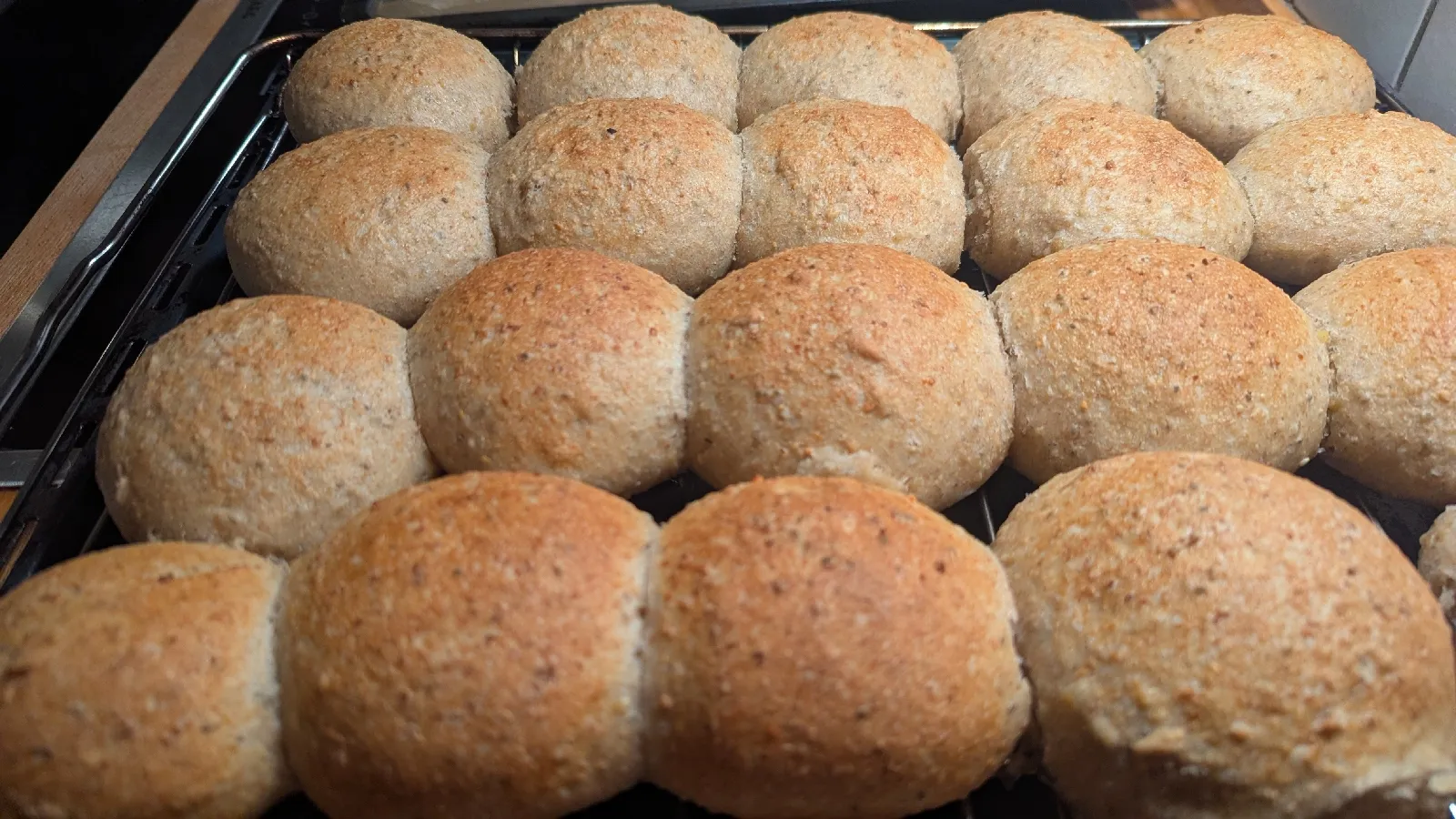
Bake at 230 °C with steam for the first 10 minutes, then vent steam and finish baking until deeply golden (total 16–18 minutes).
Cool completely before freezing.
Nutritional Notes
-
~8–8.5 g protein per bun
-
Complete essential amino-acid profile
-
Omega-3 from chia, vitamin E from sunflower seeds
-
Improved mineral absorption from rye and whole grain fermentation
These buns are designed as a practical vegan staple that can be baked in batches, frozen, and reheated during the week.
Why this version works
- _Wheat + soy _provides a complete amino-acid profile.
- Soy corrects wheat’s lysine limitation.
- 150 g soy delivers lysine benefit without breaking gluten
- Caputo Blue compensates for protein dilution and whole grain
- High autolyse hydration prevents stiffness and density
- Whole-milled Øland adds fiber, minerals iron, (zinc, magnesium), and flavor.
- Oil and moderate hydration keep buns soft after freezing and reheating.
- Strong steam ensures oven spring despite heavy inclusions
Nutritional notes
-
~9 g protein per bun
-
Complete essential amino acids
-
Two buns provide a substantial portion of daily lysine needs
-
Designed to complement a normal vegan diet, not replace whole meals
Chia seeds (20–25 g per 2 kg dough)
Chia seeds are an excellent vegan source of omega-3 fatty acids (ALA), which are important for brain development and cardiovascular health. They also provide calcium and soluble fiber. Used in small amounts, chia improves nutritional quality without affecting dough structure.
Sunflower seeds (40–50 g per 2 kg dough)
Sunflower seeds contribute vitamin E, magnesium, and healthy fats. They mainly supply omega-6 fatty acids and add texture and mild flavor. Keeping the amount moderate avoids an excessive omega-6 intake.
Sesame seeds (20–30 g per 2 kg dough)
Sesame seeds are rich in calcium, iron, and zinc, minerals that can be harder to obtain in vegan diets. Finely ground sesame integrates well into dough and improves mineral intake without altering taste.
Whole rye flour (20–30 g)
Rye flour supports mineral absorption by activating natural phytase enzymes during fermentation. This improves iron and zinc availability and adds depth of flavor without compromising softness.
Storage and use
-
Freeze once fully cooled.
-
Reheat directly from frozen:
- 180 °C oven, 8–10 minutes
Protein and amino acids are unaffected by freezing or reheating.