Wholeegrain Neapolitan Pizza Recipe
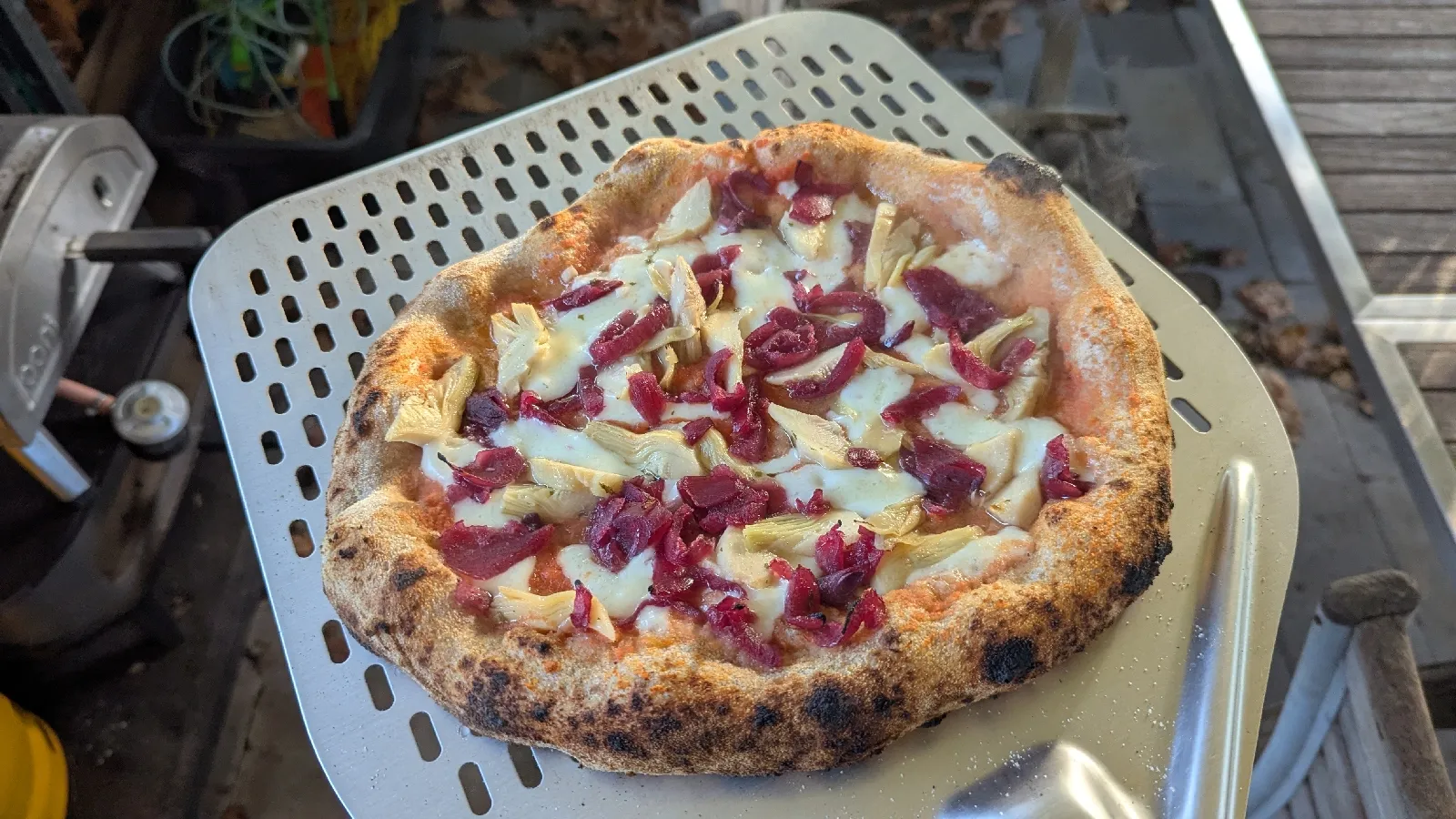
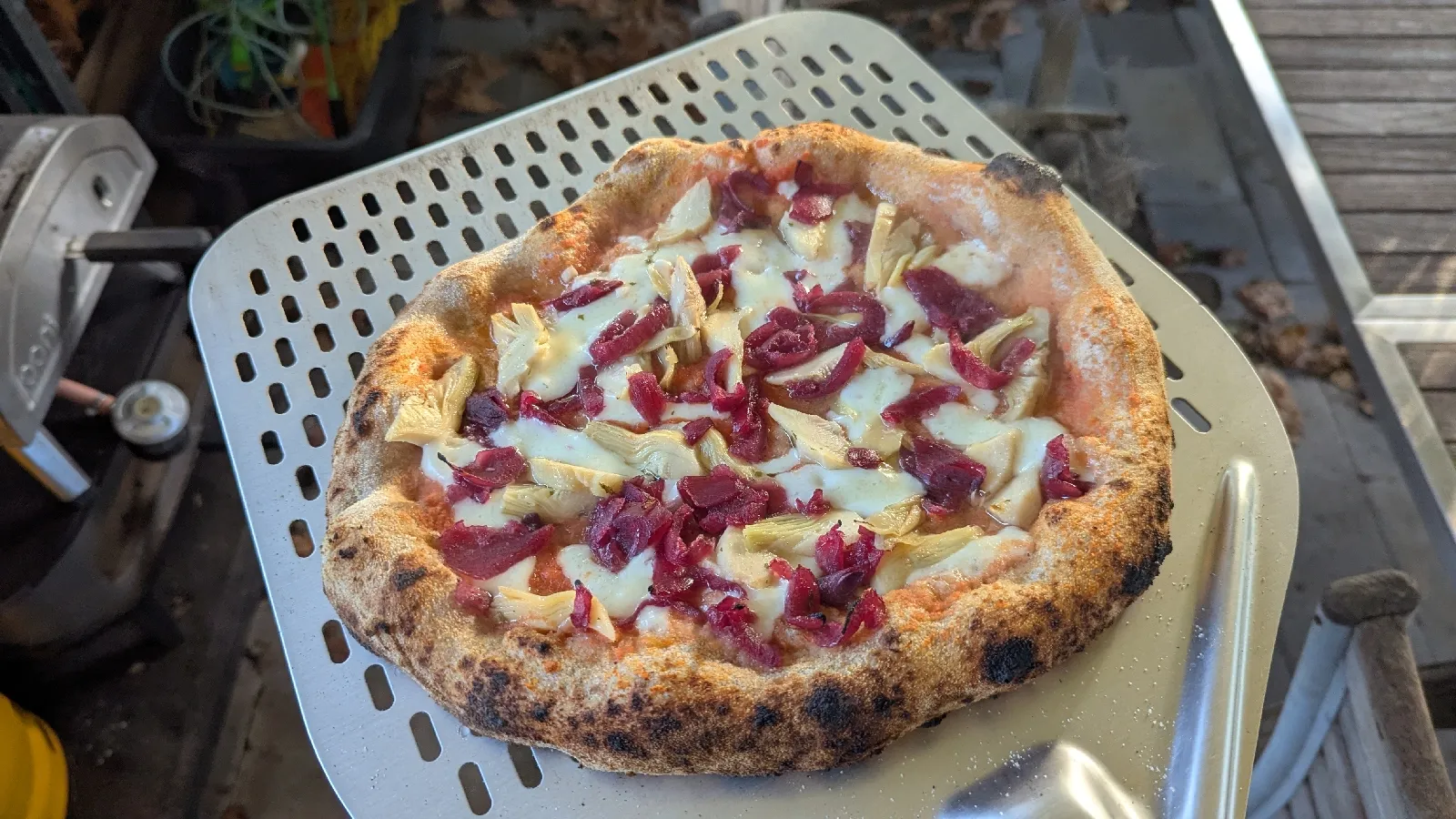
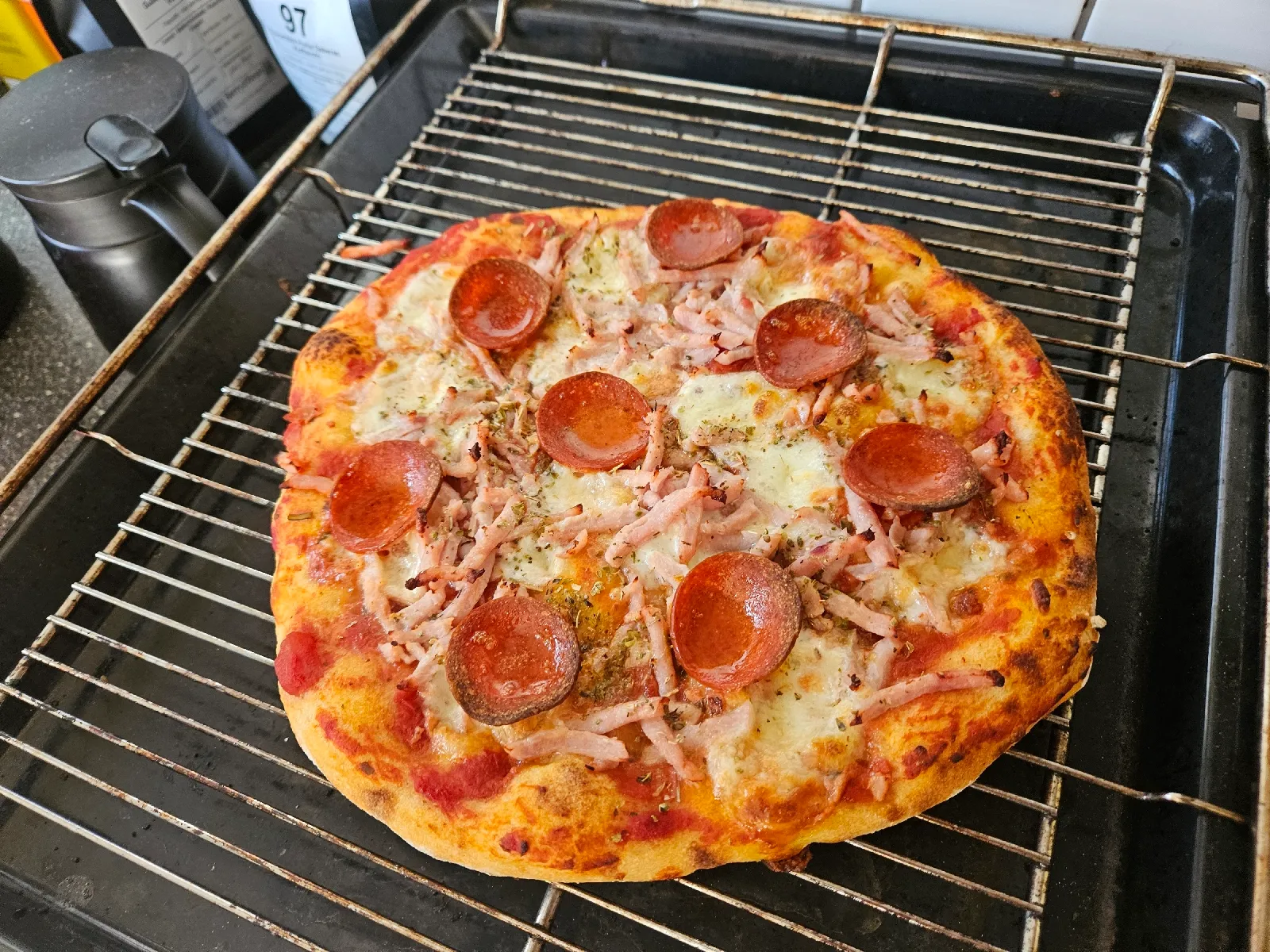
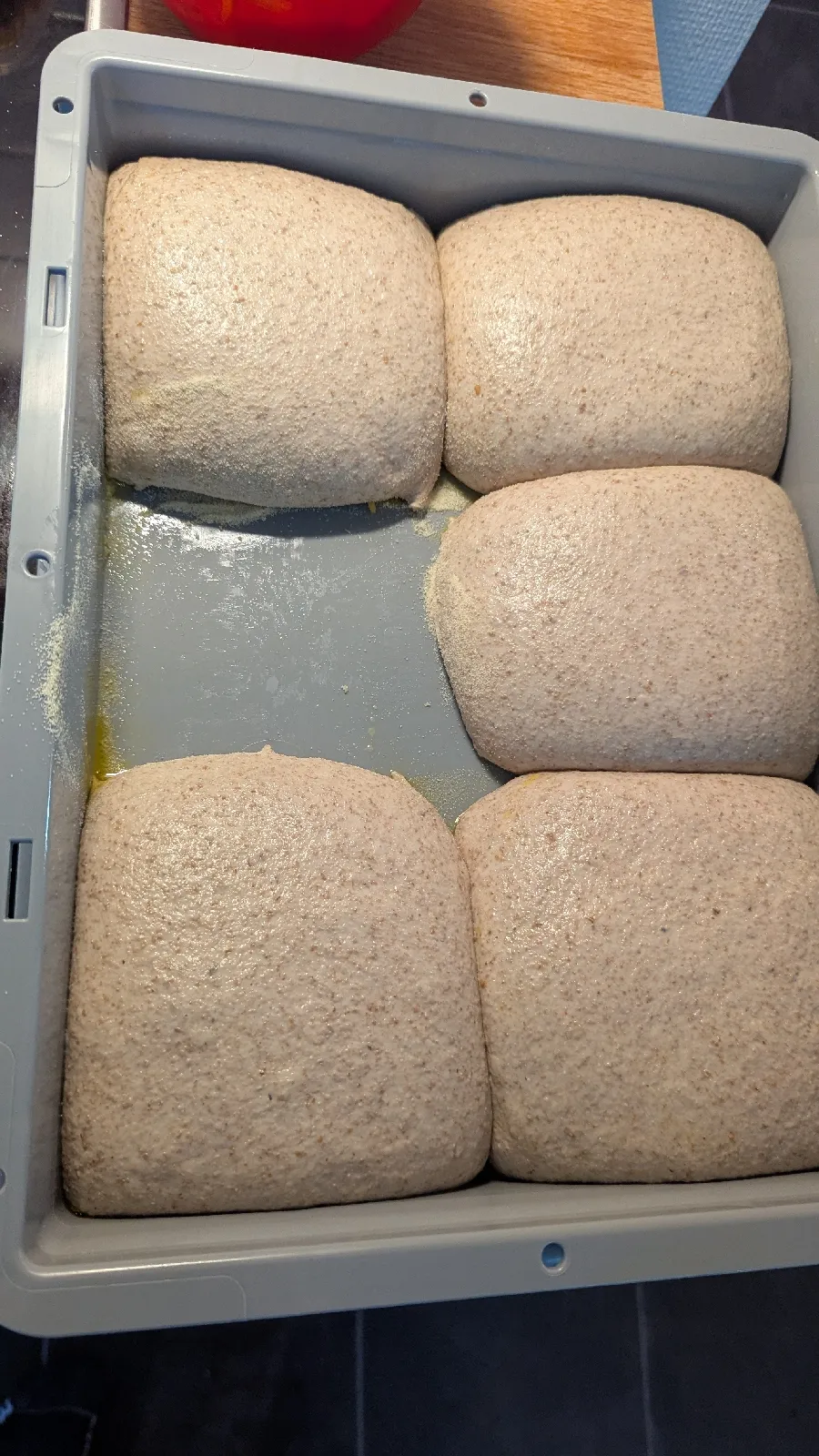
Developing the Perfect Wholegrain Neapolitan Pizza Dough: My Criteria, Equipment, and Preferred Method
As much as I love making classic Neapolitan pizzas for my family, I’ve long wished the pizzas could be a bit healthier than those made with pure white flour. That’s why I set out to develop a wholegrain pizza dough that still delivers the taste and texture we associate with true Neapolitan pizza — airy, soft, and blistered from a screaming hot oven — but with a nutritional boost.
My Criteria for Wholegrain Neapolitan Pizza Dough
-
50% Wholegrain:
I aim for a balanced dough — half wholegrain, half classic tipo 00 pizza flour. This not only makes the pizza more nutritious but also preserves the dough characteristics we want.
-
Highish Hydration, Not Too Stiff:
Wholegrain flours absorb more water, so my dough targets around 74% hydration. This ensures it’s manageable yet extensible—perfect for stretching thin Neapolitan-style bases.
-
Lean Dough, Traditional Ingredients Only:
I stick to the essentials: flour, water, salt, and yeast. No sugar, oil, or other enrichments. This keeps the crumb light and the flavor clean.
-
High-Temperature Bake:
I always bake pizzas at around 400°C in my dedicated pizza oven. This gives the dough its classic texture and leoparding (the spotted char).
-
Equipment:
Kneading is crucial for gluten development, especially with wholegrain flours. My preferred method is the spiral mixer, which handles both types of flour with ease and keeps the dough temp stable and low.
Why Wholegrain?
Much of the pizza dough used historically—even in Naples—was naturally darker and contained more bran and germ than the ultra-refined flour common today. Modern stone-ground or home-milled wholegrain flours connect us to this tradition, while offering better nutrition and flavor complexity.
Recipe: 50% Wholegrain Neapolitan Pizza Dough (For 6 Pizzas)
This recipe is optimized for long cold fermentation (48–72 hours), which improves digestibility and brings out rich, wheaty aromas. If you can, refrigerate wholegrain wheat kernels before milling to keep the flour cool and enzymatic activity well controlled.
Blend: Caputo Blue (Tipo 00) + Wholegrain Mariagertoba or Manitoba
Target ball weight: ~280 g (makes 6 pizzas; total dough ≈1,680 g)
Kneading method: Spiral mixer
Ingredients
-
460 g Wholegrain Mariagertoba flour
-
460 g Caputo Blue (00 Pizzeria Flour)
-
680 g Cold water (≈74% hydration)
-
18 g Salt
-
1.5 g Dry yeast (or ≈5 g fresh yeast)
Method
-
Pre-chill grains (if milling at home):
Refrigerate Mariagertoba wheat kernels before milling to keep flour temperature below 24°C.
-
Autolyse (optional but recommended):
Mix both flours with about 90% of the water (≈610 g). Rest 30–45 min at room temperature. This step helps relax the dough and promote gluten formation, especially important for wholegrain.
-
Mixing:
Using a spiral mixer, add yeast to the autolysed dough. Mix on low, slowly drizzling in the remaining water (≈70 g). Add salt last. Knead until the dough is smooth, elastic and reaches ~23–24°C.
-
Bulk Fermentation (Room Temp):
Let the dough rest for 30–45 min at room temperature.
-
Cold Fermentation:
Transfer dough to a covered container. Refrigerate (4–6 °C) for 48–72 hours. Dough should rise slowly and develop a rich aroma.
-
Balling & Final Proof:
Remove dough from the fridge 4–5 hours before baking. Divide into six 280 g balls. Rest covered until the balls become airy, soft, and very extensible.
-
Bake:
Preheat pizza oven to 400°C.
Stretch dough balls gently into bases, top with your favorites, and bake for 60–90 seconds, rotating for even charring.
This approach gives you a pizza that’s both flavorful and wholesome, showing that tradition and nutrition can go hand-in-hand in wholegrain baking. Try it out, and bring the taste of real Neapolitan pizza—with a wholegrain twist—to your family table!